
MeasuringWelfare.info launched to support smarter farm animal welfare assessment
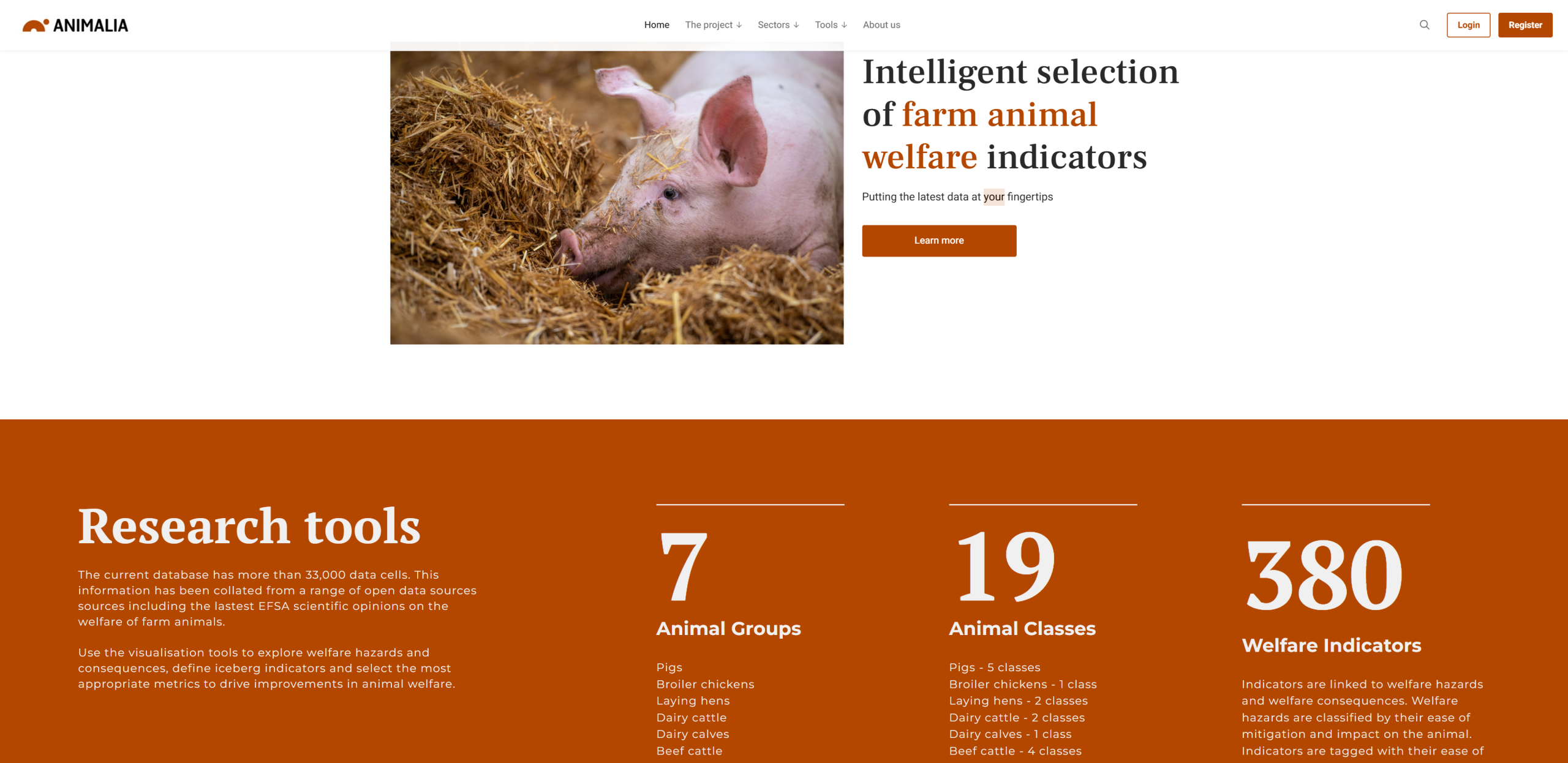
A new online resource, MeasuringWelfare.info, has been launched to help researchers, food businesses, policymakers and animal welfare professionals explore and select meaningful indicators for assessing farm animal welfare.
Measuring farm animal welfare effectively requires reliable, scientifically grounded indicators. However, with hundreds of potential measures available, identifying the most useful combinations can be challenging, particularly when monitoring programmes must balance scientific rigour with practical constraints such as time, cost and ease of assessment.
MeasuringWelfare.info has been developed to help address this challenge by making research on animal welfare indicators more accessible and supporting a more systematic, evidence-based approach to their selection.
The resource builds on collaborative research involving Cerebrus Advies, Chronos Sustainability, Animalia and MatPrat, which has explored how mathematical optimisation techniques can identify efficient combinations of welfare indicators across different livestock species and production systems.
At the heart of the research is a database containing 389 animal welfare indicators, covering dairy cows and calves, pigs, beef cattle, broiler chickens, laying hens and sheep. Developed using scientific evidence, including assessments from the European Food Safety Authority (EFSA), the database links individual indicators to the welfare hazards and consequences they can help identify.
A key concept underpinning the work is that of “iceberg indicators” — measures that provide information about multiple aspects of animal welfare. By identifying combinations of these indicators, it becomes possible to assess a broad range of welfare concerns without necessarily measuring every potential indicator individually.
The research goes further by incorporating additional practical considerations, including the ease of using individual indicators, the severity of associated welfare consequences and the feasibility of mitigating underlying welfare hazards.
MeasuringWelfare.info provides a platform for communicating and exploring this research, helping users understand how different indicators relate to welfare risks and how their selection can be informed by different priorities.
The approach has potential applications across the livestock sector. Food businesses can use this evidence to inform supply-chain welfare monitoring, regulators can develop more targeted assessment protocols, and researchers can identify combinations of measures suited to their particular objectives.
The underlying optimisation methods have demonstrated that relatively small combinations of carefully selected indicators can provide extensive coverage of welfare hazards and consequences, potentially making monitoring programmes more efficient without sacrificing their scientific relevance.
The launch of MeasuringWelfare.info represents an important step towards making this research more accessible and supporting the wider use of data-driven methods in farm animal welfare assessment.
By connecting scientific evidence with practical decision-making, the project aims to help organisations focus their monitoring efforts where they can deliver the greatest value for animal welfare.
Explore the resource: www.measuringwelfare.info